In this article:
- Translating learning goals into multimedia
- Planning a field trip for your virtual class
- Why an online education platform needs a production studio
While boarding the train for a work trip, a Penn LPS Online student adjusts the volume of his earbuds as he hears the opening chimes of a new podcast episode. Elsewhere, another Penn LPS Online student stretches on the dance studio floor as she watches a video about the science of evolution.
Both of these students are in class. Their coursework includes high quality audiovisual material produced by the School of Arts & Sciences (SAS) Online Learning Team.
With more than 25 years of experience at the forefront of remote instruction, the SAS Online Learning Team is committed to making online coursework exciting, engaging, and innovative. While Penn faculty collaborate with the team’s instructional designers to tailor their learning objectives for accelerated 8-week courses, the team’s media crew adds color, music, and movement to their vision.
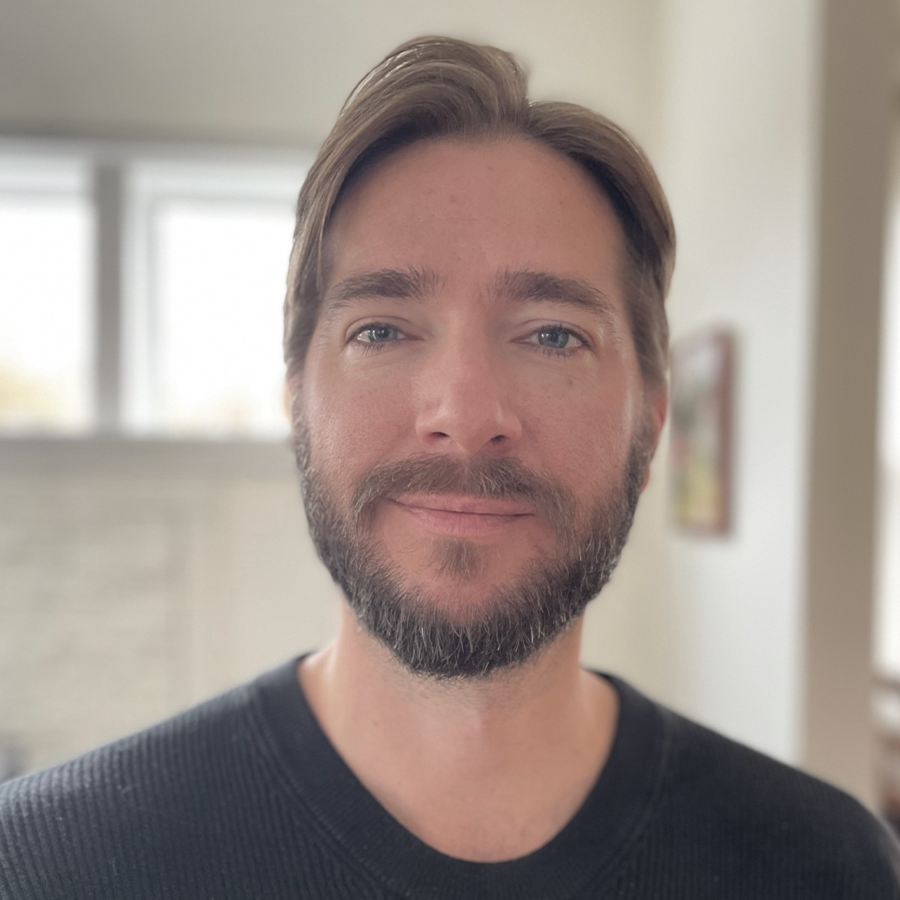
“We do podcasts. We do interviews. We go out to the field. We'll bring you into the studio. We talk to people on Zoom if they're not local. We'll do animations or illustrations,” says Zachary Humenik, Director of Digital Media. “On the media team, everybody is specialized in certain things.” Zach, who has a background in documentary filmmaking and news media, oversees the media team and contributes to video shoots, music composition, and more. Levester Williams serves as Animator and Video Producer; Dan Shields is the Online Learning Studio Manager and also shoots video; Video Producer Nicole Piser edits video; and Les Rivera shoots and edits videos. Together, they enhance online courses with immersive multimedia experiences.
In this article, meet the creative professionals who animate, orchestrate, and edit the audiovisual material that helps bring Penn LPS Online courses to life.
Translating learning goals into multimedia
Like their colleagues on the instructional design team, the media team kicks off their production process by meeting with the course instructor—and tailoring their approach to each individual course and its learning objectives. “We can do anything under the sun, but we want to make sure that every media decision is based on the learning goals and is specific to the course,” explains Zach. “A course in statistics or math is going to have a much different media approach than a course in anthropology or global studies, because those are different methods of learning.”
For example, an online math or science course may require some creative strategy for displaying formulas: Should they be typewritten or handwritten? How should they be revealed during the lecture? A coding course might rely heavily on tutorials to guide through a script; “There’s not too many extra bells and whistles that you can put there that would add value and not be distracting,” notes Zach.
But for many courses, learning objectives can be supported by a wide variety of multimedia tools for engagement. “We can elevate the course with a field trip or video or a podcast—something that makes for higher production value,” says Zach. Podcasts are well-suited for course material that doesn’t necessarily require a visual component, but that might be brought to life through spoken word and sound effects: for example, an episode about West Philadelphia residential building projects might incorporate the sounds of birds chirping and a hammer hitting a nail. “Basically we're aiming to have it sound like something that you'd hear on NPR,” says Zach. Each podcast has its own unique theme song created by the team in studio. Music can transform the meaning of spoken words, explains Zach; for example, playing a major chord versus a minor chord over the same speech can change its emotional tone.
Video production includes footage filmed in the media team’s studio, where faculty can record their lectures and interview guests with the benefit of a teleprompter and visual tools. “The studio is our home base,” Zach observes. But video content may also include B-roll footage, or supplemental video that captures scenes related to the course content. In some cases, the team will travel to capture B-roll and even film interviews and explorations of sites around the Philadelphia region. These virtual fields bring students along on visits to places of interest, no matter where in the world they log on.
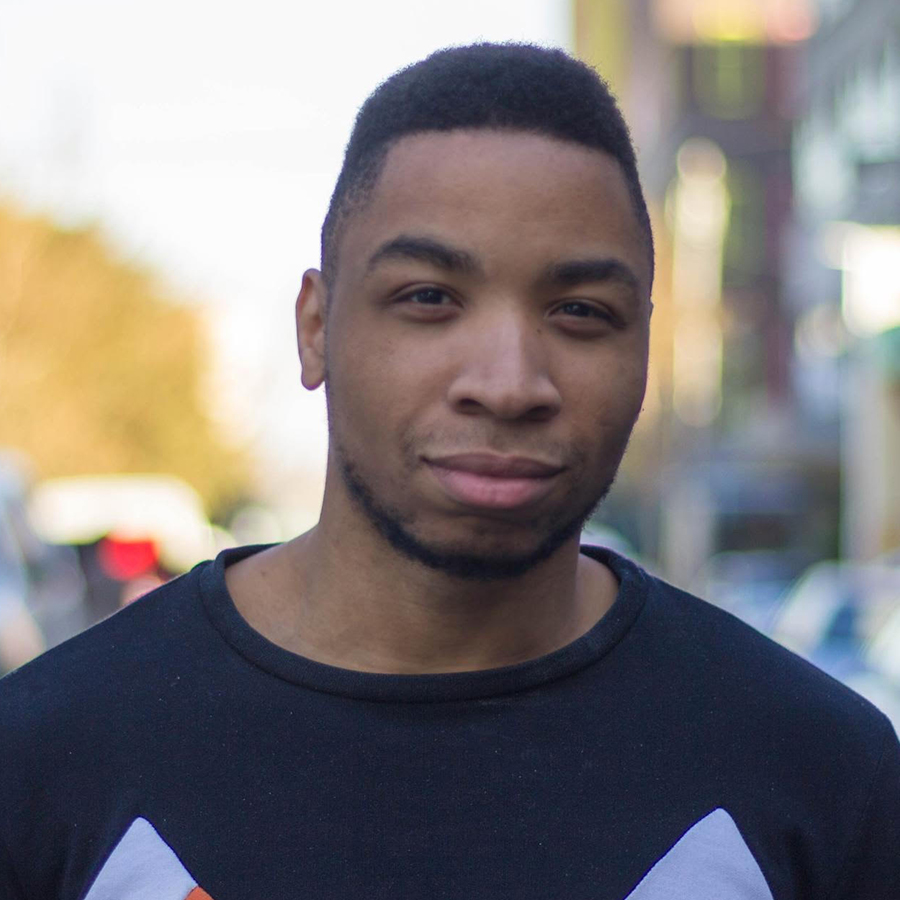
For example, the instructors of SPRO 1000: Scientific Reasoning wanted to bring science history and the scientific process to life by bringing the media team to museums and other sites around Philadelphia, the historic home of many scientific breakthroughs. “We went all over Philly to film this,” Zach recalls. One of the instructors, Dr. Michael Weisberg, already had footage of himself in Chile and the Galápagos during a Penn-funded expedition. “So not only do we have him at the Academy of Natural Sciences and in the studio, we also have these beautiful shots of the Atacama Desert and looking out of a prop plane flying into the Galápagos,” he adds. “That was definitely a cool course,” recalls Levester, who served as video editor for this footage. “I got to act like I was editing a National Geographic video.”
The media team’s visual art capabilities are particularly useful for science courses like SPRO 1000; for example, Levester incorporated some of Dr. Weisberg’s B-roll footage into animations and videos to demonstrate how the carapaces of the Galápagos tortoise population evolved into distinctive shapes. “Of course, you can’t capture that on video. You can only illustrate it,” explains Levester. “I was able to animate that.” He has also been incorporating some interactive programming applications into certain courses; for example, he collaborated with the instructor of a School of Arts and Sciences high School Program statistics course to build a custom experimental simulator that runs within Canvas for the course takers to perform experiments for their assignments.
Zach describes their multimedia efforts as a way to elevate the material—and also to make it appealing and familiar. “If the video looks professional, if the episode sounds like a podcast they would listen to out in the world outside of their education, there’s a good argument to be made for that increasing engagement,” he says.
Planning a field trip for your virtual class
“The field trips are a thing that I think separates Penn in terms of our online learning,” says Zach. “We think they bring great value, and they're the most fun thing to do, in my opinion.” The focus of field trip video may vary by course: in a physics class, the speaker might do demonstrations for the camera; for environmental studies courses, the team might have to bring their equipment out into nature to record waves and streams. Often, there are interviews.
Planning and carrying out the field trips draw on the team’s documentary and news media experience. Once the course instructor and the media team agree on a field trip location, the media team works out the logistics with the site—for example, confirming that they are willing to be filmed and providing media release forms. Before traveling to a location, the media team creates a pre-production plan. “It’s like an itinerary: what time are all the interviews going to happen, what time do we have to be out of there so they can go back to work,” Zach explains. They also create a shot list, including B-roll. As an example, Zach points to travel shows like No Reservations or Parts Unknown: Imagine Anthony Bourdain going to a restaurant. You see him walking down the street, and you hear his voiceover talking about who he’s going to meet. You might see an establishing shot of the building or its sign outside, and then he goes in and shakes their hand. “It’s a standard production dressing that we follow,” he says.
For a recent example, the summer 2025 course RELC 3100: Spirituality, Wellness, and Identity: Making Meaning in the Modern World gave the team ample opportunity to create fun and engaging material. “We have been going out into the field with Dr. Justin McDaniel for years now,” says Zach; for example, they had previously taken footage in Woodlands Cemetery and the Wagner Free Institute of Science for RELC 2000: Gods, Ghosts, and Monsters. “The conversation is different than with someone who has never done it before, because Justin will come to us with ideas.” For RELC 3100, Dr. McDaniel visited the studio to record introductory material for the modules of the new course, as well as to film interviews with guest speakers. He also collaborated with the media team on a podcast that explored ideas about wellness and spirituality, and asked students to listen to it and write journal entries on its content throughout the term. Finally, the instructor and media team recorded two field trips: one to a restaurant in West Philadelphia called Black Dragon, and another to Voyages, a wellness center that offers ketamine therapy. These field trips provided jumping off points for class discussion and could potentially inform a student’s final project. “The wellness course is a great example of the multimodal approach that we take here,” says Zach. “We want to take our students on a learning journey, so that they are getting a bunch of different types of input that are all confirming the same learning goals in a way that's engaging and fun at the same time.”
At Voyages, the team interviewed the managing director and communications director of the wellness center, as well as some of their therapists. Their interviewees spoke about different forms of treatment, including music therapy and ketamine therapy; they described the process of talking patients through their experience or just sitting with them in silence. “This is not what you think of when you explore in a class like this!” says Zach. “The process was fascinating. Everyone was extremely relaxed and chilled out, but extremely passionate about their outcomes.” The team took notes during the interview process and looked for visual elements that would illuminate the conversation; for example, they took B-roll of headphones and musical instruments to illustrate the conversation about music therapy.
Taking the production process out of the studio can present challenges. SAS Online Learning also supports the College of Liberal and Professional Studies Applied Geosciences Program, which offers fully remote graduate courses. For one lesson, Zach and his team went to Lehigh Gap to visit a superfund site and learn about efforts to remediate it into a recovering natural habitat. “It must have been the hottest day possible,” he recalls. “We hike for two miles, cameras on our backs, stopping every 10 minutes to do what we call a setup or a standup. When you’re filming trees and water and different soil types, it’s very different than talking about emotions and how psychedelics help drive those emotions to different states.”
Levester recalls a field trip to a privately owned farm in Lancaster, planned for a biochemistry course to illustrate how glyphosate-based herbicides might be used to manage weeds on a large farm. It was another high-temperature day, and the crew had to make some creative decisions. “The biochemist wanted to read off of a script,” says Levester. “In the studio we have a teleprompter behind the camera, so the instructor would be able to look and talk directly into the camera. But to do that outside, where we don’t have electricity, we had to print out the script and hold it up.”
“That’s a great example of where there’s a will, there’s a way,” laughs Zach. On the plus side, both recall the lunch served by the farm, featuring homegrown food and fresh cherries—a highlight of that sweltering on-site day.
Why an online education platform needs a production studio
“There are a few things that are great about being at Penn, and one of them is access,” says Zach. “Penn is a well-respected institution, so we go to locations that we normally wouldn’t be able to access, and people will speak candidly because they feel like they're talking to people who are on their level.” So, for example, when Zach’s team calls the National Institute of Health and asks to speak to some of their doctors and scientists, they find themselves speaking to some of the nation’s top experts for a course on biochemistry—and scheduling interviews with those experts for course material. “Then you're behind the scenes on a conversation that you wouldn’t have access to if you were not a Penn student, and therefore you wouldn’t have access to that knowledge,” he adds. “That is, I think, one of the intrinsic values that Penn can offer.”
The media team should know: while they are on site and in the studio, they get to speak with the experts too—asking questions, helping the faculty and interviewees warm up to their subjects, and editing recorded material into high-quality audiovisual experiences. “We learn so much,” says Levester. “It’s great to work with the content and ask, how would a student receive this? Because I am also someone who is new to this.”
“I always joke that we get a mini degree in almost every topic we have here in Arts and Sciences,” adds Zach. “You sit with the expert in their field and you really do become the student, whether you intend to or not. You have to put your learning cap on.”
To learn more about the Penn LPS Online course production process, visit Meet the team who designs your online course experience.



